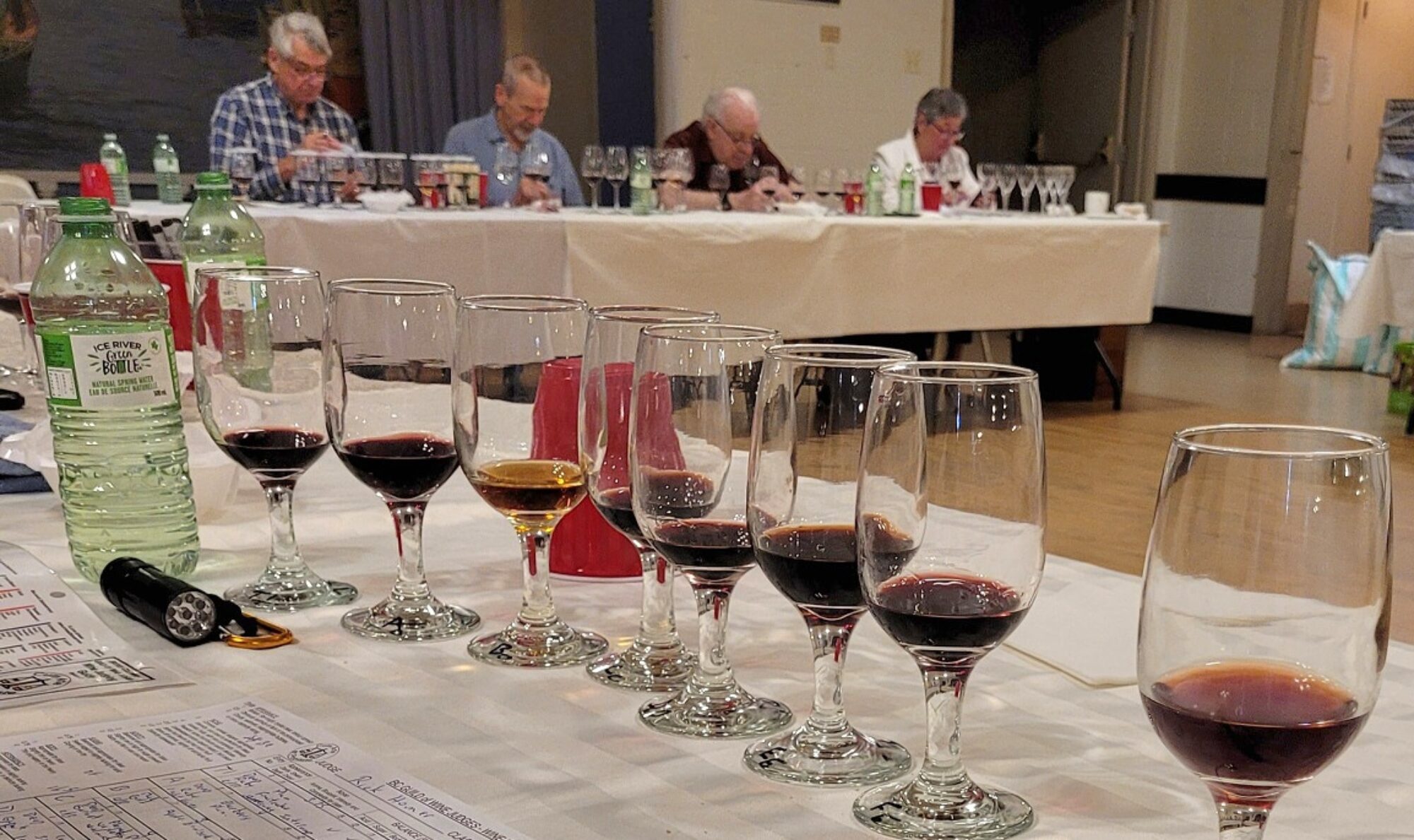

Wine Judge
Member since 2000
What is your most memorable wine or wine and food experience?
On Pier 6 there was a tatty beach umbrella shading a folding table. A bed of ice covered the top. Douglas, the oyster vendor, rigged up a ladder to support a Jeroboam. In times of glut, the Californians market jug wines at close to cost. Chablis is plentiful and unpretentious, usually being blended with the workhorse Pinot Blanc. A siphon tube from the jug serpentined through the ice to a little tap under the table. Mismatched glasses were in a rinsing bucket. We sat on soap boxes in the sun. The first sip was so delightful that I held back on Tabasco for the oysters: just a squeeze of lemon and a pinch of salt. In the hot Seattle sun, Douglas kept shucking and drawing glasses of ice-cold Chablis. That was 50 years ago, and it is still the best wine I have ever drunk.
What wines have you always wanted to try but haven’t? What is your favorite vineyard? Region?
In the middle of Pest, there is a big monument to the 7 Magyar tribes. They invaded the sandy plains of Hungary and settled there. After that, as the tour guide said, “The history of Hungary in a nutshell: many wars lost them all.”
In the middle of Vancouver, there was a big Hungarian restaurant, The Seven Horsemen. A Picerno in ethnic dress served me Egri Bicaver. It paired so well with the goulash, that I was completely won over. The waitress was pretty good too. I returned many times, and eventually read up on Hungary and it’s legendary Kadarka grape.
Forty years later, we went to Hungary and spent a month hunting the elusive Kadarka. The Hungarians make wine as good as any in the world. But all the Kadarka we found was inferior. Pity we didn’t cross the border to Romania where they do a half decent job of turning the same grape into Gamza.
What event or experience started your journey in wine?
A bottle of Catawba wine (made from stolen grapes) in my gym locker at boarding school.
At King Edward VII School, there were 4 boarding houses. Davis was directly opposite the Shevaun mansion, which was perched on top of Houghton ridge, vantage point of the extremely wealthy. It overlooked lower Houghton and Rosebank, home to Johannesburg’s doctors and lawyers. From there one could see clear across to Pretoria. A big grape arbor was just over the fence. Mrs. Shevaun liked to make her own Passover wine, so Jonas, the man servant, who lived in the gatehouse, was charged with guarding the grapes. Borders, or the perpetually hungry, were just across St Patrick’s Road.
At 2:00 a.m. we dummied our beds and shimmied down the drainpipe. The Catawba grapes were ripe. Speed and silence were the order of the night. We filled our pillow slips and stuffed about every third bunch whole into our mouths, spitting out the stems, and swallowing the big slimy pits. The skins were also slimy, or what is known as “slip-skin”. The Catawba vine is a hardy success story in every second Johannesburg garden. It is suited to the Transvaal summer rains. Of the Labrusca family, Catawba is named after the Indian tribe where it was first found by settlers. So are most American grapes. The 6 botanical groups are : labrusca, riparian, rotund flora, vitis aestivalis, rupestris and mutagenesis.
There was a good picking left on the vines, so hopefully, Jonas was not in trouble. The pillow slip contents went into shared buckets in the sports lockers where they fermented away happily on wild yeast. When the skins softened, we quaffed fizzy cupfuls of the good stuff. Until one day, the proverbial hit the fan. An assistant house master and 2 prefects carried out a locker inspection in the changeroom. Apparently, the bouquet was just too good.